Manuel Manga

Relational Intelligence: designing satisfying relationships

Manuel Manga

October 13, 2013

Manuel Manga
Manuel Manga

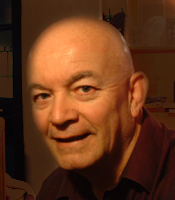
  Relational Intelligence: Human beings are social animals, we live in systems of relationships, with nature, other people, objects, etc.

In this talk we will focus on 5 key relationships for human beings. We will also focus on the role of language and conversations in creating and maintaining effective relationships. Conversations for creating relationships, conversations for exploring possibilities, and conversations for effective coordination of actions.  We will also look into the systemic relationship between emotions and conversations, and the emotion of love as the foundation to human relations.

Manga is the director of the Center for Evolutionary Leadership, which develops leaders for building a just, flourishing, and sustainable world. He is also a leadership coach and organizational consultant.

You can view the slides for this important presentation here.

Center for Evolutionary Leadership:   www.evolutionleader.com.   “Homo sapiens-ethicus evolutivo: being ethical & choosing to bring forth relational systems that are loving, just, flourishing, & sustainable.”


Humanist Community Forum (2013-10-13) – Relational Intelligence: Designing Satisfying Relationships (Manuel Manga) from Humanist Community-SiliconValley on Vimeo.


Martin Carcieri

John Rawls and Humanism

Martin Carcieri

 October 6, 2013

Martin Carcieri
Martin Carcieri

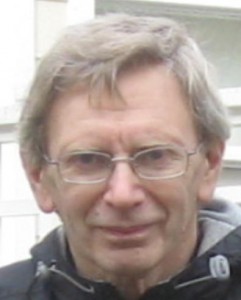
John Rawls is the most influential Anglo-American political theorist of the past three centuries. In bestowing the Presidential Medal of Freedom on Rawls in 1999, Bill Clinton noted that he had put our liberties on a brilliant new foundation. That foundation is a refined version of the social contract as developed by early modern thinkers like Hobbes, Locke, and Rousseau. It is of particular interest for Humanists since it provides an objective but workable basis for politics and ethics. It is neither objective, that is, in the sense of some transcendental foundation like God or Nature, nor purely subjective, with the nihilist dead end to which that leads. It is a contract, the basic terms of which, Rawls argues, we would (and do) accept as the basis of our politics and ethics. Besides presenting the basic method and principles for which Rawls argues, Carcieri will also present Rawls’ famous theory of civil disobedience, which builds upon the work of Thoreau, Gandhi, King, and others.

Martin Carcieri is an Associate Professor of Political Science at San Francisco State University, where he teaches courses and seminars on Constitutional Law and Political Theory. He holds a J.D. and Ph.D. from the University of California, and has published twenty-five journal articles and book chapters.

Click here to view the Handout for this fascinating and informative talk.


Chris Schriner

Bridging the God Gap:
How to Find Common Ground with Theistic Friends and Family Members

Dr. Chris Schriner

September 29, 2013

Dr. Chris Schriner
Dr. Chris Schriner

Did you know that atheists are the minority group most Americans are least willing to allow their children to marry? According to a recent study, they are “seen as a threat to the American way of life.” The authors of a study of North American atheists were “astonished” that so many had paid a heavy price for disbelief.  “Even in the San Francisco area – arguably the most tolerant part of the United States – [about half] reported that being a nonbeliever had produced difficulty with relatives and friends” (Hunsberger and Altemeyer, Atheists: A Groundbreaking Study of America’s Nonbelievers, p. 55). As one atheist commented, “. . . I keep quiet about it. People assume you are heartless, shallow, amoral, and it calls their own beliefs into question. Atheism greatly disturbs people” (p. 47).

No wonder it’s such a challenge for believers and non-believers to talk about religion!

Dr. Chris Schriner is Minister Emeritus of Mission Peak Unitarian Universalist Congregation in Fremont and a retired psychotherapist.  Unitarian Universalism includes both theists and atheists, and Chris has emphasized positive communication between theistic and atheistic members of his congregations. He is the author of five books, including Bridging the God Gap: Finding Common Ground Among Believers, Atheists and Agnostics. 

Bridging the God Gap strongly affirms the legitimacy of secular humanism, and Chris will suggest ways of helping people see atheism as a valid and potentially positive life stance. He will also describe techniques for discussing theology without coming to blows, and ways of finding conceptual common ground with some liberal theists.

————–

Dr. Schriner’s handout at the Forum:

Practicing Positive Communication

Here are seven strategies that help disarm difficult conversations about theology, based upon Bridging the God Gap: Finding Common Ground Among Believers, Atheists and Agnostics, by Roger Christan Schriner, available at Amazon.com. For more information contact Chris at cschriner@uuma.org, or access his blogs:

Theists & Atheists: Communication & Common Ground, http://theistsandatheists.wordpress.com

            Did God Really Say THAT!? A Blog about the Bible, http://didgodreallysaythat.wordpress.com

1. Pre-communicate. Talk about what you’re going to talk about. Say what you hope to accomplish. “There’s a distance between us because of our religious beliefs. I would like to take a little step toward bridging that gap.” You may want to frankly acknowledge that one discussion won’t fix everything.

2. Once you begin, keep your main goals in mind. Concentrate on the most important items instead of getting lost in a dust-storm of details. State one or two central points, and repeat them so that they stand out. Resist the temptation to veer off onto trivial tangents to make an impressive point.

3. Throughout the conversation, try to stay connected, heart to heart. Without knowing it we may approach a dialogue about religion as if we’ve entered a physical fight. When we smite someone on the forehead with a particularly weighty argument, we may expect this poor benighted soul to bow down in surrender, grateful for having been shown the light. How disappointing when people just resent us for making them look stupid.

Attitude is crucial. If you are sincerely interested in connecting with another human being, he or she will probably feel safe enough to open up. Even if you stumble and stammer, your good intentions will come across. But if your goal is to attack, debate, or dominate, it’s hard to conceal this agenda with handy-dandy communication techniques.

When you start to lose personal connection, you might say, “I can feel myself starting to treat this like a battle. But I care about you and I want to treat you right.” Be especially careful if you find yourself getting flustered. Do not blurt things out while you are upset. Take a breath, and remember that your goal is to reach out, not put down.

To help stay connected, be big-hearted about criticism. Refrain from firing back impulsively, shooting from the hip. When attacked, listen and reflect before responding. After pausing to regain clarity – and charity – show your critic that you can see how it looks from his or her viewpoint, even if you don’t agree. Then say what you believe.

4. Listen well, and ask to be heard in return. Think of talk radio as an example of how not to speak and listen respectfully. Be honest with yourself about your own conversational faults. Do you resort to sarcasm? Personal attacks? Name-calling? A condescending tone of voice or facial expression? If you catch yourself being hostile or demeaning you can admit it and apologize. People appreciate such candor and humility.

5. Treat this talk as an opportunity to practice clear awareness. Raise your antennae, and tune in to more than the obvious. Communication isn’t just kicking words around like a soccer ball. We also send messages with our tone of voice, how fast or loud we are talking, and what we do not say. Be aware also of posture, body position, facial expressions, movements, gestures, and eye contact (or the lack of it).

Talking about religion is an exercise in empathetic imagination. We communicate best when we notice what the other person is feeling and thinking, and what we will sometimes sense is pain. People are distressed when their religious views are questioned. When we become distressed we need to talk it out, to diminish the pressure we feel inside. Then we are able to think more clearly.

6. Practice meta-communication, communication about communication. Comment occasionally about how this chat is progressing. Express appreciation for what’s working well. Mention ways that you are trying to be constructive and ways your friend seems to be doing the same. Be gracious about admitting glitches and commit yourself to doing better.

7. Practice post-communication. After you say something important, check to see if your message was received. It has been said that the main problem with communication is the illusion that it has been accomplished. Don’t just make noises in the direction of your friend and assume that your message is getting through. Find out what he or she is hearing. “The main thing I’m trying to say is ______ Do you see what I’m driving at?” And make sure you are hearing clearly: “Basically, you are saying ______. Is that right?” “Are you saying ____ or are you saying ____?”

Before parting, thank your friend for sharing something personal and significant.

Few rules are absolute, and any set of guidelines can backfire under certain circumstances. Let each situation guide your actions. But these seven time-tested principles usually work just fine.

Theism and Atheism: A Matter of Degree

Both theists and atheists may think of reality in personal terms. Theists usually apply personal descriptions more literally, but there is no clear dividing line between literal and metaphorical language. Poetry and factual description shade off into each other:

  God is a person who looks like us . . .

       God is a person but does not have a human body . . .

            Calling God a person is a human way of speaking

            about something far beyond our understanding . . .

                 Ultimate Reality is trans-personal, but

                 we can metaphorically think of it as a Thou . . .

                      The universe is physical but it has personal qualities . . .

                           The universe does not actually have such qualities,

                           but we can speak poetically as if it does . . .

                                The universe, and whatever caused or created

                    the universe, should never be thought of as personal.

People often slide up or down this continuum with changing moods and social contexts.

——————-

For more on Dr. Schriner’s views see his two blogs:

Theists & Atheists: Communication & Common Ground
http://theistsandatheists.wordpress.com

Did God Really Say THAT!? A Blog about the Bible
http://didgodreallysaythat.wordpress.com


Humanist Community Forum (2013-09-29): How to Find Common Ground with Theistic Friends and Family Members (Dr. Chris Schriner) from Humanist Community-SiliconValley on Vimeo.


Miharu Alison Sato

What is a Healthy Diet?

Miharu Alison Sato 

September 22, 2013

Miharu Sato
Miharu Sato


Miharu Alison Sato (M.S., Registered Dietician, Certified Diabetes Educator, and a Health Educator for the Palo Alto Medical Foundation) will discuss what makes up a healthy diet.  The extent to which different types of meat, dairy products, and eggs can be part of a healthy diet, and what easily accessible and healthier substitutes for these foods exist (if any), will also be discussed.

The beautiful slides from this presentation are now available here.

You can also view the Harvard 7-Day Menu here.


Humanist Community Forum (2013-09-22): What is a Healthy Diet? (Miharu Alison Sato, M.S., R.D.) from Humanist Community-SiliconValley on Vimeo.


Gemma Tillack and Chelsea Matthews

Rainforest Action Network

Gemma Tillack and Chelsea Matthews

September 15, 2013

Gemma Tillack
Gemma Tillack

The Rainforest Action Network (RAN) conducts campaigns to protect rainforests, their inhabitants, and the natural, life-sustaining systems through education, grassroots organizing, and non-violent direct action.

For updated information on recent success follow this link:  http://www.humanists.org/blog/wp-content/uploads/2013/10/Updated-info.pdf

Gemma Tillack directs RAN’s agribusiness campaign. She will talk about RAN’s newest campaign, Last Stand of the Orangutan. This campaign exposes the dark secret of palm oil usage in the US snack food industry, and its effects on the natural habitat of the Orangutan. The Network calls on companies to commit to purchase only responsibly grown palm oil.

Chelsea Matthews
Chelsea Matthews

Chelsea Matthews, Forest Program Coordinator at RAN, will talk about RAN’s current campaigns to address the root causes of climate change, deforestation, and the oppression of forest peoples. She will also give an overview of RAN’s success in transforming the global marketplace through education, grassroots organizing, and non-violent direct action.

Gemma Tillack directs Rainforest Action Network’s Agribusiness campaign which is addressing one of the main drivers of rainforest destruction in Indonesia: industrial palm oil. The campaign is focused on shifting demand away from socially and environmentally irresponsible palm oil, creating incentives for the responsible production of palm oil and transforming global supply chains. RAN’s campaigns create the market leverage necessary to improve both corporate and government policies and practices.

Prior to this position, Tillack worked for 10 years for The Wilderness Society in Australia.  Tillack played a key role in the campaigns that contributed to Gunns Limited’s decision to transition out of native forest logging in Tasmania. Gunns Limited was Australia’s largest native forest logging and wood chipping company. For the past two years Tillack has been involved in negotiations that lead to the signing of the $274 million Tasmanian Forest Intergovernmental Agreement (TFIGA). This agreement was reached between environment Non-Government Organizations, the forestry industry and unions and aims to support the protection of important natural forests and a transition to a plantation based forestry sector in Tasmania. Tillack has a background in environmental science and community organizing.

Here are a few links you can share with people who want to learn more about Rainforest Action Network:

http://www.ran.org/our-mission – learn more about Rainforest Action Network and its campaigns for the forests, their inhabitants and the natural systems that sustain life by transforming the global marketplace through education, grassroots organizing and non-violent direct action.

http://understory.ran.org/ – read RAN’s blog for breaking stories.

http://www.ran.org/palm-oil – learn about RAN’s campaign to protect rainforests and Indigenous Peoples and rural communities rights from palm oil expansion.

Conflict Palm Oil report: http://www.ran.org/conflict-palm-oil

Petition calling on the Snack Food 20 to cut Conflict Palm Oil from their supply chains: http://act.ran.org/p/dia/action3/common/public/?action_KEY=8546

Webpage for donations: https://salsa.wiredforchange.com/o/6022/t/6444/p/d/rd_ran/donations/public/ran_donate_custom.sjs?donate_page_KEY=7315

http://www.ran.org/take-action-online – find out how you can take action to support RAN’s work.

———————————————————————

The Humanist Community

September 15, 2013

Addendum

Frederic March, a past president of the Humanist Society of  New Mexico, has written an essay titled “Utopian Visions and the American Dream” published in Volume 21 (1) 2013 of Essays in the Philosophy of Humanism”. This “Addendum” is an abstract from his essay.

Utopian narratives express a universal yearning for a better human society. In his description of Plato’s ideal social fantasy, Bertrand Russell categorizes its attributes as education, culture/economy, biological control, religion, and justice. Although Frederic March develops all of these attributes in his essay, in this “Addendum” we shall deal primarily with education.

As our nation’s leading advocate for humanism, the AHA helps defend our democracy against breaches in the barriers of church-state separation. It promotes science and evolution teaching unadulterated by theology. It defends freedom of thought and religion.

The AHA recently issued its Ten Commitments: Guiding Principles for Teaching Values in America’s Public Schools:

1.   Altruism – Altruism is the unselfish concern for the welfare of others without expectation of reward, recognition or return.

2.   Caring for the World Around Us – Everyone can and ought to play a role in caring for the earth and its inhabitants.

3    Critical Thinking – We gain reliable knowledge because we are able to observe, report, experiment, and analyze what goes on around us.

4.   Empathy – We human beings are capable of empathy, the ability to understand and enter imaginatively into another living being’s feelings, the sad ones and the happy ones as well.

5.   Ethical Development – Questions of fairness, cooperation, and sharing are among the first moral issues we encounter in our ethical development as human beings.

6.   Global Awareness – We live in a world that is rich in cultural, social and individual diversity, a world where interdependence is increasing rapidly so that events anywhere are more likely to have consequences everywhere.

7.   Human Rights – Human Rights is the idea that people should have rights just because they are human beings.

8.   Peace and Social Justice – A curriculum that values and fosters peace education would promote understanding, tolerance, and friendship among nations as well as among cultural and religious or philosophical groups.

9.   Responsibility – Our behavior is morally responsible when we tell the truth, help someone in trouble, and live up to promises we’ve made.

10. Service and Participation – Life’s fulfillment can emerge from an individual’s participation in the service of humane ideals.

These Commitments clearly encompass Education for Democracy. The AHA has the capacity to organize and coordinate the resources of many organizations that also seek to educate for a humanist democracy

These addendums are an attempt by Hilton Brown to bring some aspects of Humanist Philosophy to the attention of persons interested in The Humanist Community. The source material for all Addendums is to be found in the lead paragraph of each addendum.